


Wrap-around labels for chemical products – plenty of space for all mandatory CLP labelling
Increased requirements for wrap-around labels due to the new CLP Regulation
Anyone selling substances or mixtures classified as hazardous must comply with the EU Regulation on the CLP Regulation (EU Regulation 2024/2865 on CLP Regulation EC No. 1272/2008), which came into force in December 2024. CLP stands for ‘Classification, Labelling and Packaging of chemicals’. It transposes the international requirements of the GHS (Globally Harmonised System) into EU law, thereby ensuring uniform labelling throughout Europe.
The CLP Regulation stipulates comprehensive labelling requirements for chemical products to ensure human and environmental safety. It also defines a new minimum font size for hazardous substance labelling and the design of CLP labels. Industry stakeholders must apply most of the new rules from 1 July 2026. Other parts of the regulation (e.g. certain formatting requirements for labels) will apply from 1 January 2027. This will result in a number of requirements that will have an impact on labels and labelling.
The usage scenario: Labelling chemical products in round containers with CLP information in multiple languages
The CLP Regulation stipulates extensive labelling requirements for chemical products. The legal declaration requirements, multilingual usage instructions and product information are so extensive that there is often not enough space on a conventional label, especially for smaller containers.
Stricter CLP rules for labels
In addition to new hazard classes, the new CLP Regulation also defines stricter labelling rules. These rules include, among other things, increased minimum requirements for the legibility of the information on the labels: font size, line spacing, font type, contrast. These requirements serve to improve the legibility of labels so that consumers and businesses can clearly and comprehensively understand the hazard information for chemicals and mixtures.
What impact do the new CLP rules have on labels?
Conventional labels that are simply stuck on are no longer sufficient for the extensive information required by law, especially when larger fonts with greater spacing are used, particularly for multilingual printing and small containers.
Additional ‘package inserts’ increase the effort involved in the packaging process and are not permanently attached to the chemical product – so they are not a solution.
What is needed is a labelling solution that offers enough space for the extensive mandatory information, is permanently attached to the product and can be labelled by machine.
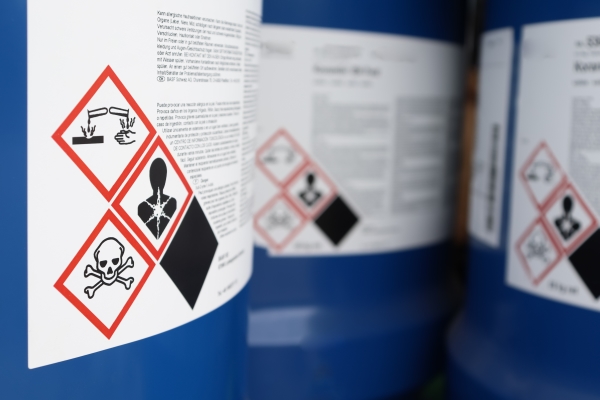

The solution: wrap-around labels for CLP labelling
HERMA has designed a wrap-around label for the chemical industry that can be printed on both sides with all the necessary information and is wrapped around the round containers multiple times in the dispensing system. This allows a large amount of information to be placed on cylindrical containers such as vials, tubes, spray bottles and cans.
These wrap-around labels are ideal for meeting the labelling requirements of the CLP Regulation, especially for small containers or multiple languages.
What are wrap-around labels?
Wrap-around labels are special labels that can be wrapped around a round container multiple times to provide additional space for information. Part of the rectangular wrap-around label is permanently attached to the container with adhesive. The remaining part of the wrap-around label is wrapped around the container and can be unrolled by the consumer to reveal all the information it contains.
What is special about HERMA wrap-around labels for CLP labelling?
- Material: HERMA wrap-around labels for chemicals are made of a durable yet thin PP film material. It is chemical-resistant and has seawater certification according to British Standard BS5609.
- Adhesive: The labels are equipped with a special adhesive so that the wrapped layers can be easily separated from each other.
- Resealability: The user can open and reseal the wrap-around label again and again. An integrated tab makes it easy to open the wrap-around label.
- Double-sided printing: The HERMA wrap-around label can be printed on both sides. This considerably increases the printable area, allowing multiple languages to be accommodated on the wrap-around label.
- Variable Informationen: When the label is applied in a labelling machine with a thermal transfer printer, variable, up-to-date information can be printed on the visible outer side of the wrap-around label (the outer layer) directly during the production process. This can include lot numbers, data matrix codes with additional information, the production date or use-by date.
- Individually adapted to the size and shape of the container: the height of the label depends on the height of the container, and the length of the wrap-around label is variable to suit the amount of text.
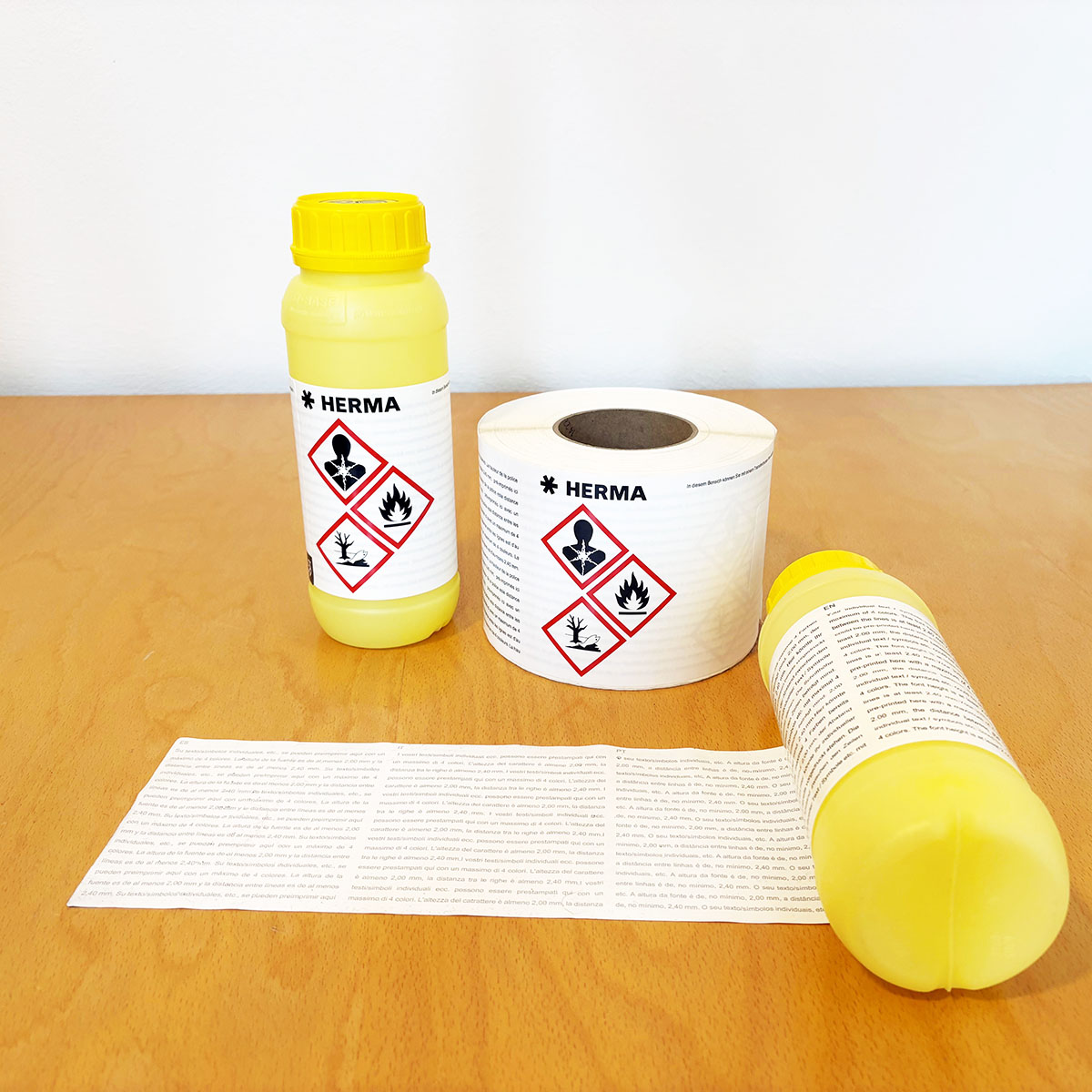
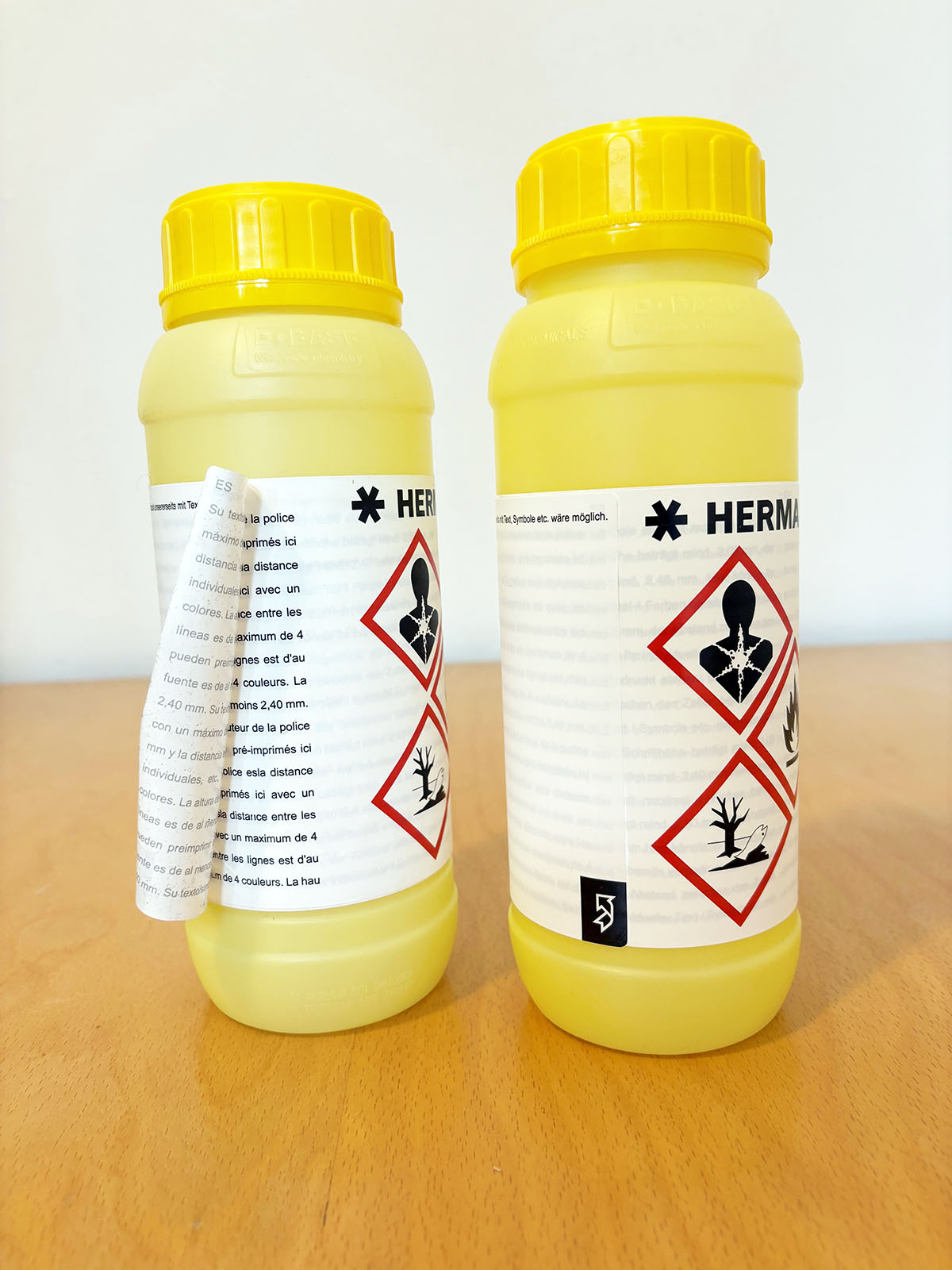
What are the advantages of HERMA wrap-around labels?
- Large labelling area: Plenty of space for hazardous substance labelling, even in multiple languages.
- Flexibility: No additional package inserts, leaflets or outer packaging required.
- Robustness: Chemical-resistant and resistant to temperature and weather influences.
- Safety: Ensures permanent legibility of safety instructions and information on handling chemicals.
- Handling: Easy to open, unroll and reseal securely.
- Adhesion: Permanently fixed to the product, as the inner adhesive layer adheres particularly firmly, even to containers with rough or ribbed surfaces, whether made of glass, aluminium or plastic.
- Use with small containers: Ideal for chemical products in smaller containers with limited labelling space, e.g. vials, tubes, spray bottles, cans.
- Versatile application: Also suitable for use in the pharmaceutical, cosmetics and food industries, as well as for labelling cables, hoses and pipes.
- Cost: Significantly cheaper than a booklet label and easier to apply.
Wrap-around labels for chemical products: We are happy to advise you!
Plenty of space for extensive information and legally required labelling, combined with a technically sophisticated solution and high user-friendliness. Our wrap-around labels are individually tailored to your product containers and offer a perfect fit for a wide range of requirements.
Whether paint buckets, bottles or other round containers: we work with you to develop a wrap-around label that is optimally suited to your product, your process and your labelling requirements.
Get in touch with us for personalised, comprehensive advice!

You might also be interested in