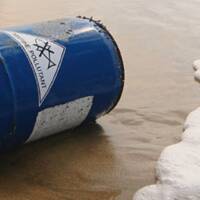
Petrochemical facility in the chemical industry, landscape format.

Chemical labels for every need of chemical industry products

When safety is a must - HERMA chemical labels: safe and reliable

Clear and legally compliant labelling with chemical labels

The labelling of products and hazardous substances in the chemical industry is governed by a whole series of legal provisions and ordinances. Chemical products, substances and mixtures are labelled safely and clearly with chemical labels in line with standardised global directives before shipping.

What are chemical labels used for?

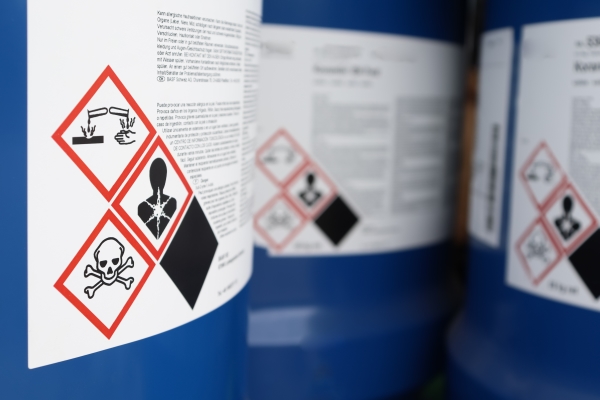
Chemical labels are used to clearly identify chemicals and provide information about potential hazards. These chemical-resistant labels feature important information such as pictograms, hazard symbols, a signal word, and hazard and safety instructions. This information provides details about the product’s contents and the associated risks

Labels for chemicals play a key role in informing consumers and ensuring the safe handling of chemical substances. At the same time, they are also used as hazardous goods labels during transport to ensure safe carriage across all modes of transport.

For transport by air or sea, additional requirements regarding labelling and seawater resistance in accordance with British Standard 5609, Section 2 or 3, apply.

We work with you to develop the right chemical labels for labelling your chemical products and hazardous substances - from the selection of materials all the way to printing.

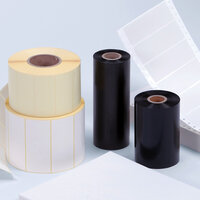
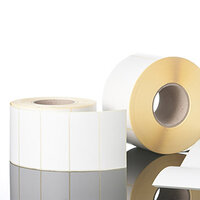
We supply chemical labels on rolls, sheets or fanfolded - in your desired label format - for your printing system - in the best quality.

To learn more about solutions for specific products in the chemical industries, click on one of the links to the product pages below. Or use our contact form. We’ll be glad to advise you.
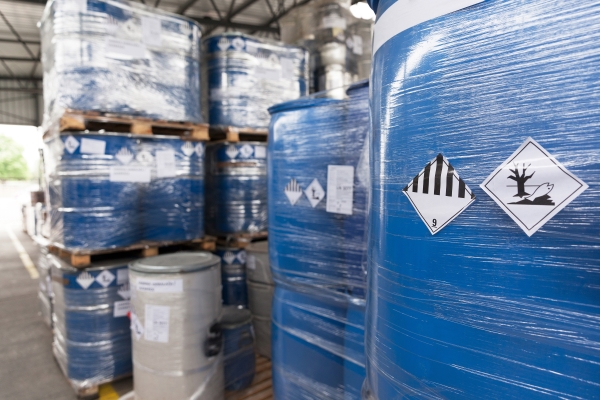
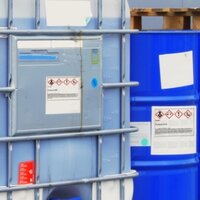
Hazardous substance and hazardous goods labels: Hazardous goods labels on shrink-wrapped containers in the chemical industry.

Comprehensive expertise for labelling your dangerous goods.

HERMA and BOXLAB Services have concluded a cooperative agreement for labelling dangerous goods. Even small quantities can be delivered quickly and in high quality - legally compliant and in conformity with standards.

Discover your advantages and detailed information on placards, warning plates and hazard labels

High standards for labelling in the chemical industry

Chemical labels must stick firmly to containers of all kinds: barrels, drums, canisters, shipping containers, IBCs, FIBCs, bottles and pallets.

  • Chemical stickers have to be able to meet the many challenges posed by different surfaces, such as metal, plastic, glass and wood.
  • Labels for chemicals need high adhesive strength even on highly curved, rough, dusty or oily surfaces.
  • Depending on their purpose, they have to be resistant to chemicals (oil, acids, alkalis, solvents).
  • Environmental factors such as heat, humidity, cold and UV radiation place additional demands on the material and the printed image.


Chemical labels tailored to your requirements

Our chemical labels are designed to meet the diverse requirements of the industry and offer solutions for a range of applications, materials and labelling regulations:

  • Resistant to environmental influences: Robust HERMA film labels withstand heat, moisture, cold and UV radiation, ensuring that labels remain legible over time.
  • High-temperature resistant: HERMA chemical labels reliably meet the additional requirements of hot-fill processes.
  • Seawater-resistant materials: We manufacture hazardous substance and dangerous goods labels for you using seawater-resistant adhesive materials, including in accordance with BS 5609 Section 3.
  • Re-printable GHS labels: GHS labels with pre-printed red diamonds allow for custom printing using thermal transfer, laser or inkjet printers with pigment-based inks.
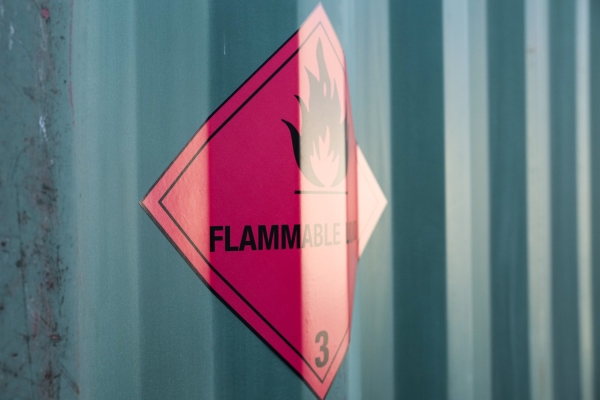
  • Fully printed hazardous goods labels: We supply hazard labels and placards in the prescribed diamond shape and in high-visibility colours for all classes of hazardous substances.
  • Flexible delivery formats: Our chemical labels are available on rolls, sheets or as folded labels, tailored to your specific label format and printing system.
  • Customised label solutions: Chemical labels are designed to suit your containers, application and labelling requirements.

Frequently asked questions about chemical labels

  • What are chemical labels?

    Chemical labels are labels affixed to products or transport units that contain hazardous chemicals. These chemical-resistant labels provide information on safe handling, storage and disposal. Pictograms, hazard statements, safety instructions and other information alert the user to the dangers posed by the chemicals contained within.

    A series of legal regulations and ordinances govern the labelling of products and hazardous substances in the chemical industry. Chemical products are labelled safely and clearly with chemical labels in accordance with globally standardised guidelines.

  • What types of chemical-resistant labels are available?

    There are different types of chemical labels:

    • GHS labels follow the globally harmonised system for classifying and labelling chemicals. Find out what is important: on our solutions page GHS labels
    • Hazardous substance labels contain information on toxic and harmful substances, and the EU Hazardous Substances Ordinance (GefStoffV), the GHS and CLP regulations must be observed. Find out more about hazardous substance labels
    • Hazardous goods labels must be used if a product poses a further hazard during transport, e.g. environmental hazard in water bodies (fish mortality). Prescribed layouts exist for this purpose in accordance with ADR, RID, IATA and IMDG. Discover our online range of ready-to-use placards and hazard labels
  • Why are chemical labels important?

    Chemical labels serve several important functions and play a key role in ensuring safety when handling chemicals:

    • Safety and consumer protection: they inform the user of potential hazards, correct handling and prevent accidents.
    • Emergency behaviour: the information on the chemical labels enables the correct emergency procedure to be followed in the event of an accident (e.g. medical treatment or removal of spilled or leaked chemicals).
    • Transport: hazardous goods labels are required by law for the safe transport of chemicals.
  • What is the correct labelling of chemicals?

    Chemical labels contain all the important information about the ingredients:

    • Pictograms visualise the hazard posed by the chemical (e.g. flame for flammable substances).
    • Hazard statements (H-phrases) provide information about the hazard posed by the chemical. Examples: H301 = Toxic if swallowed or H335 = May cause respiratory irritation
    • Precautionary statements (P-phrases) provide information on how to handle the chemical in order to avoid hazards. Examples: P273 = Avoid release to the environment or P281 = Use prescribed personal protective equipment
    • Signal words "Danger" (more hazardous substance) or "Warning" (less hazardous substance) indicate the severity of the hazard
    • Product name or code is used to uniquely identify the chemical product.
    • Supplier data indicates who the manufacturer of the chemical product is. This includes the name, address and contact information.
    • Additional information can provide further details, e.g. disposal instructions.
  • What properties must chemical labels have?

    Chemical labels must adhere securely to a wide variety of containers. Examples are: Bottles, canisters, metal cans, barrels, IBCs, pallets and containers. This is ensured by the extremely high adhesive strength of HERMA chemical labels, even on difficult surfaces (highly curved, rough, dusty, oily, etc.)

    The label material must be robust and, depending on the intended use, resistant to chemicals such as oil, acids, alkalis and solvents. HERMA chemical labels made of film (PE or PET) are the right solution here.

    Even heat, moisture, cold and UV radiation, as well as the requirements of hot filling, are reliably mastered with chemical labels from HERMA.

  • Do all chemicals have to be labeled?

    Yes, all chemicals that have been classified as hazardous must be labelled with chemical labels that contain all the prescribed information. The labelling obligation results from the CLP Regulation (Regulation on Classification, Labelling and Packaging of Substances and Mixtures) and the GHS (Globally Harmonised System), which guarantee uniform labelling throughout Europe. 

    The labelling obligation covers not only the product packaging (primary packaging), but also secondary packaging, such as outer cartons, and tertiary packaging, e.g. pallets or containers. 

    There are exceptions to the labelling requirement, e.g. for substances in small packaging or packaging that is difficult to label. The exemptions are listed in the CLP Regulation.

  • What is the difference between a chemical label and an SDS (safety data sheet)?

    These are two different documents with different information content on the chemicals. 

    The chemical label, attached to the product or transport unit, contains the most important hazard information. In this way, all users, whether private or commercial, are made aware of the hazards. 

    The safety data sheet (SDS) contains all safety information in detailed form and additional information on physical and chemical properties. It is aimed at experts and those responsible for the safe handling of the chemical in the company or laboratory.

Discover practical solutions with chemical labels from HERMA

In the chemical sector, extremely secure adhesion and durability are particularly important to ensure that the important information on zhe most varied containers reaches the recipient safely. Resistance to chemicals and seawater, as well as secure adhesion even on strongly curved or oily surfaces, are the distinguishing features of HERMA chemical resistant labels for this application.

Solutions for the chemical industry

Seawater-certified GHS labels

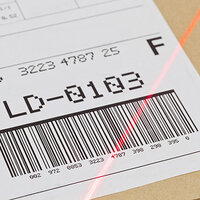
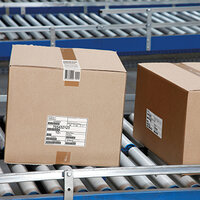
Track & trace in the chemical industry with chemical container labels

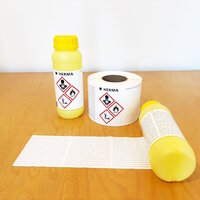
CLP labelling: Wrap-around labels for chemical products
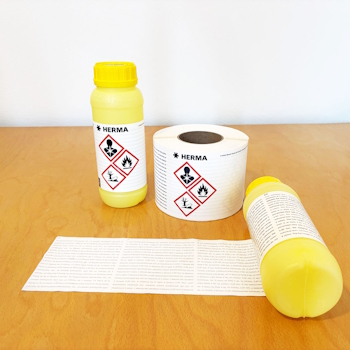
Two yellow bottles with hazard symbols and a roll label on a table. The bottles likely contain chemical substances. CLP labelling: Wrap-around labels for chemical products

Find out more about our solutions for specific products in the chemical industry
Please use this contact form for inquiries about industrial requirements.

If you have any questions about HERMA branded products in smaller packaging units, we look forward to your inquiry using the contact form "Office and Home".


Request a quotation

We produce labels according to your specifications - to suit your industrial application!


Icon My Products, Blank Labels with Custom Made Stamps, Homepage Online Store


Please take a moment to give us some detailed information on the following page so that we can advise you well.

To the form

Is there a way we can support you? If yes, please contact us.