Key facts about HERMA barcode labels
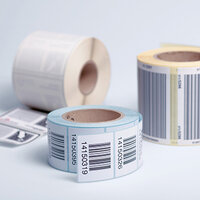
- Versatile applications: From traditional EAN product labelling in retail and batch tracking in production to robust inventory and warehouse labels.
- Wide range of codes: Support for all standard 1D codes (e.g. Code 128, EAN, Interleaved 2/5) and 2D codes (e.g. QR Code, Data Matrix) for maximum information density in the smallest of spaces.
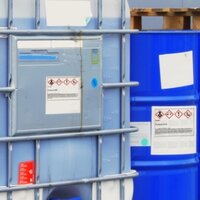
- Customised materials: Depending on requirements, high-quality papers or durable films are used – specially designed for extreme conditions such as deep-freezing, contact with chemicals or strong adhesion to critical surfaces.
- Customised printing: Professional digital printing for sequential numbering and complex number ranges from databases (CSV/XLS), including qualified barcode verification for optimal readability.
- Flexible solutions: Available as pre-printed labels or as blank rolls/A4 sheets for self-printing using thermal transfer or laser printers.
- Quality born of experience: HERMA produces over 1 billion barcode labels annually in Germany – with a focus on sharp contours, smudge resistance and process reliability.
Barcode labels on rolls: managing the flow of goods effectivly
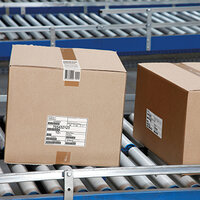
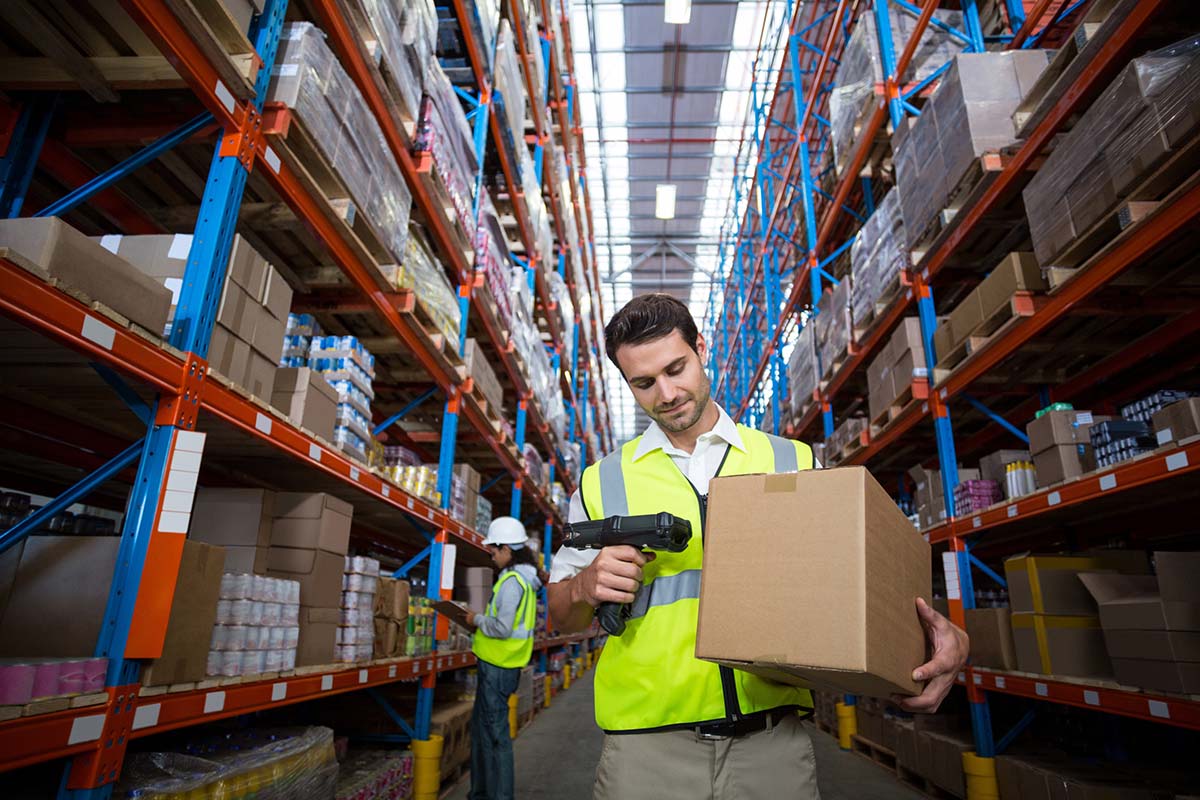
Barcode labels have become indispensable in logistics, production and retailing. Barcodes allow product information to be read in a fraction of a second and ensure an efficient flow of goods. Barcodes labels ensure clear marking and identification of parcels, cartons, packaging and transport containers in logistics processes and shipping.
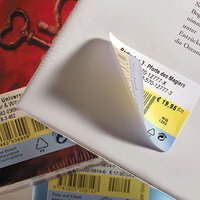
Barcode labels are used at the supermarket checkout or for stocktaking. Barcodes can be found on food, clothing, electronics, books and magazines, for example. The barcode label is used here to transmit price and product information, for merchandise management systems and ordering processes.
HERMA Labels: Your specialist for individual barcode labels
We are your partner if you are looking to have barcode labels printed professionally and to your specific requirements by one of the leading specialists in self-adhesive technology. Take advantage of our decades of experience and the extensive expertise of our specialists for your adhesive barcode labels. Together we’ll select the best materials and the right printing process.
State-of-the-art printing systems are used for printing labels for barcode labeling: consecutively numbered or fixed barcodes are produced on digital printing machines, with all barcode types, printed from your individual number range.
We print the barcode on high-quality papers and foils for best contrast and reliable barcode readability.
What’s important with barcode labelling:
- Label format, material and adhesive properties, perfectly matched to your application of barcode labels
- All barcode types, including EAN-128, EAN-13, QR code/Data Matrix
- Numeric and alphanumeric codes, with fixed or consecutive numbering
- Database-supported administration of number ranges per customer, for highest data security
- Processing of barcode numbers from customer-specific number ranges, via CSV and XLS file
- High-quality papers and films for razor-sharp print-outs: smudge-resistant, scratch-resistant and easily readable barcode labels
- Monitoring of print quality for excellent reading results, verified by certified readability barcode tests
- Advanced roll technology, ideal for further processing of barcode labels in labelling machines and packaging facilities
Discover use cases for your HERMA self adhesive barcode labels
The use of barcodes has become standard in all sectors – and barcode labels are the perfect means of applying barcodes to a wide variety of surfaces. You’ll find these and many more practical examples in our ‘ "Solutions’ section.
Ideal as box ID labels: Consecutively numbered barcode labels

![[Translate to English:] Wischfest, kratzfest und sicher lesbar. Alle Barcode Typen.](/fileadmin/Industrieetiketten/Produkte/Barcode-Etiketten/Barcodeetikett-auf-brauner-Kartonflaeche-mit-Hand-und_Scanner.jpg)



Would you like to learn more about our barcode labels?
Manufacturers and retailers have relied on our custom barcode labels for more than 30 years. Each year, we manufacture well over a billion barcode labels at our plant in Germany. We’ll deliver whatever kinds you need: quickly, reliably and on time. You can have your barcode printed with us: in top HERMA quality.
Barcode labels: tailored to your application
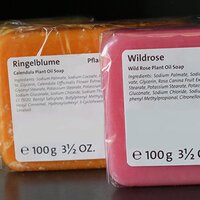
Barcode labels on rolls are made from a variety of materials, depending on the application: from uncoated or coated paper labels for temporary use to saltwater-resistant, certified high-tech materials for secure, permanent labelling. We print adhesive barcode labels on white paper, or dyed in the colour of your choice, as well as pre-printed with your logo. Permanent adhesive barcode labels, which are reliable even under extreme conditions, removable barcode labels, or with a special adhesive for low-temperature applications. There are also low migration barcode label stickers for direct contact with foodstuffs. It goes without saying that we manufacture barcode labels in compliance with all statutory regulations and ISO standards.
Custom-printed barcode labels tailored to your specifications – with fixed or sequential numbers.
Examples of uses for barcode labels
As we produce barcode labels to your exact specifications, any configuration is possible. To give you an idea, we have compiled a list of some of the most common use cases for you here:
- Barcode labelling with consecutive numbering, for document archiving (DMS labels)
- Labels with barcode as merchandise return labels, with removable adhesive
- Permanent adhesive barcode labels oder removable barcode labels as EAN labels for product identification
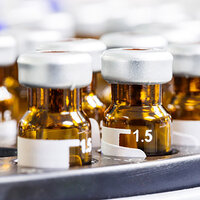
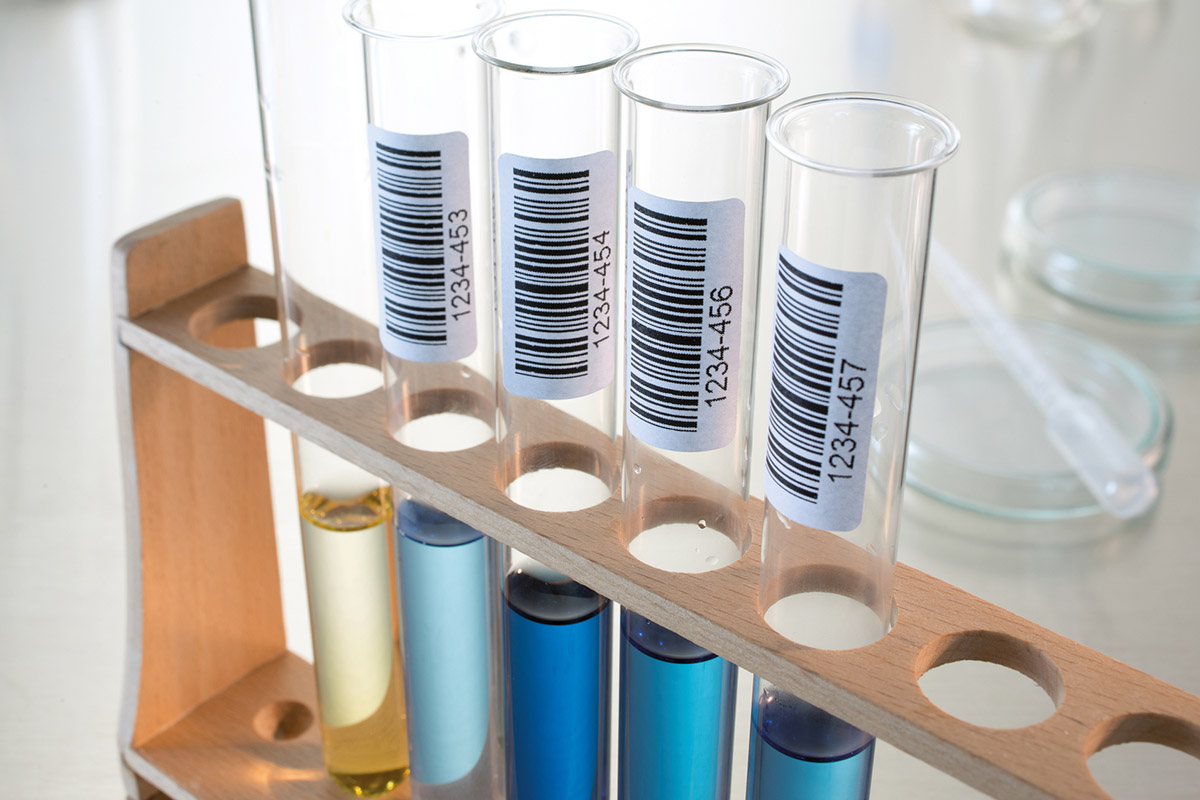
- Chemical-resistant barcode stickers for inventory (for marking equipment)
- Rugged barcode labels for warehouse shelves, made from foil material
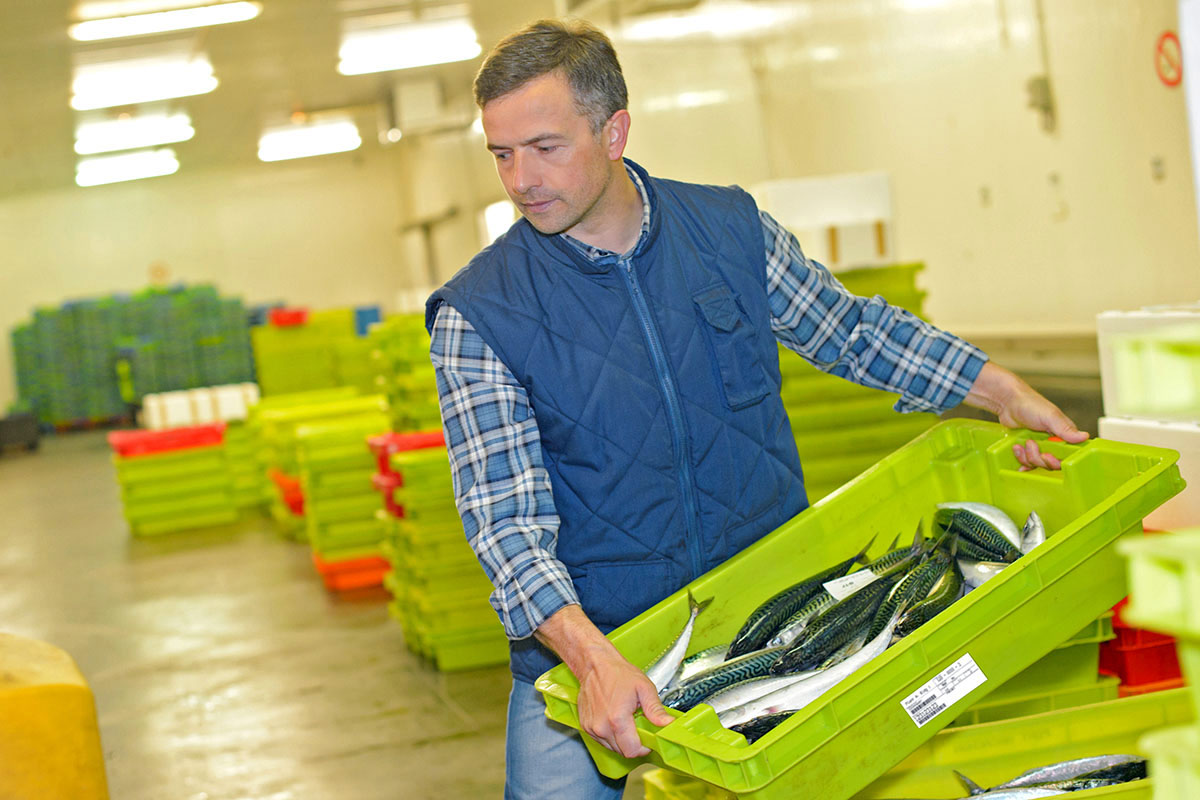
- Barcode labels with special adhesive for deep-freeze applications
- Duplex labels with barcodes: ideal as batch numbers for product traceability
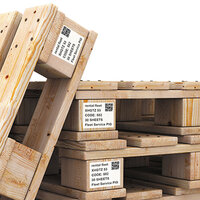
- Barcode labels with extremely strong adhesion for secure attachment to critical surfaces like wood - can be also used as outdoor barcode labels
How does a barcode work?
A barcode encodes information in an optical pattern – in traditional 1D codes, this is done using bars and spaces of varying widths; in modern 2D codes such as QR or Data Matrix, it is done using a matrix of light and dark squares.
When scanned, a beam of light – a red laser beam in the case of laser scanners, white LED light in the case of camera scanners – hits the barcode. Light areas reflect the light, dark bars absorb it. The scanner converts this light-dark pattern into a digital signal, which is then decoded into numbers or characters.
With 1D codes (e.g. EAN, Code 128), the information is contained in the sequence and width of the bars – and is read in only one direction. 2D codes (e.g. QR code, Data Matrix) utilise both dimensions of the surface and can therefore store significantly more data in a very small space.
The print quality of the label is crucial for reliable readability: sharp contours, sufficient contrast and a suitable substrate are the basic requirements – particularly in industrial processes with high scanning speeds.
Which types of barcodes are there?
We always print the type you require on the barcode labels.
Depending on the application, different types of barcodes are used when printing barcode labels.
1D codes (barcodes)
|
Code |
Character set |
Information density |
Typical use |
|
EAN-13 / EAN-8 GTIN |
Numeric (13 or 8 digits, including check digit) |
Medium |
Retail Wholesale |
|
Code 128 |
Alphanumeric (full ASCII character set including special characters) |
High |
Industry, logistics & shipping, manufacturing, document management |
|
Code 39, 3 of 9 |
Alphanumeric (43 characters: digits, uppercase letters, special characters) |
Low |
Industry, warehousing; increasingly being replaced by Code 128 |
|
Interleaved 2/5 ITF / ITF-14 |
Numeric (digits 0–9, even number of digits) |
High |
Shipping pallets & parcels Manufacturing Industry |
|
Codabar |
Numeric + selected special characters |
Low |
Retail Healthcare |
2D codes (area codes)
|
Code |
Character set |
Information density |
Typical use |
|
Datamatrix |
Alphanumeric (up to 3,116 digits or 2,335 characters) |
Very high |
Manufacturing Industry Micro-components Smartphone-readable |
|
QR-Code Quick Response |
Alphanumeric + special characters (ASCII 1–255) |
Very high |
Marketing Retail Manufacturing Linking to URLs Smartphone-readable |
|
PDF417 |
Alphanumeric (high data volume) |
Very high |
Transport & Logistics Warehousing Distribution |
Code 128
This modern 1D barcode has a high information density and is therefore very space-efficient. In Code 128, the entire ASCII data set can be represented - letters, digits and special characters, in upper and lower case. An internal checksum is formed for high data security. Code 128 can be scanned by all common barcode scanners. Have labels printed with barcodes: Code 128 are mainly used in industry, document management, logistics and as inventory labels.
Code 39
Code 39 (3 out of 9) is alphanumeric and can represent 43 characters - numbers, capital letters and selected special characters. The information density is lower than with Code 128, so Code 39 requires more space. The character set is limited compared to Code 128. For these reasons, it is increasingly being replaced by Code 128. Optionally, a check digit can also be used, for secure readability. The start and stop symbol of Code 39 is the asterisk (*), often visible in the plain text line. Code 39 has no length limit, and can have an even or odd number of digits. Barcode stickers with Code 39 are supported by all common 1D and 2D barcode scanners.
EAN Code
The European Article Number (EAN) is the often used name for the Global Trade Item Number (GTIN). The term "GTIN" has been the correct designation for "EAN" since 2009. The GTIN can be applied for at the organisation "GS1 Germany". This code is mainly used in wholesale and retail trade, the barcode label is used to record product markings at scanner checkouts. The standard version has 13 digits (EAN 13), for particularly small-format products there is a short version with 8 digits (EAN 8). Printing EAN codes: the EAN code can be used in different sizes, depending on the space available on the product. Manufacturers purchase corresponding number packages for their products from GS1 - this enables the products to be marked with a unique EAN number. In retail companies, the EAN labels are scanned at the checkout and the corresponding article and price information is read from the database. EAN labels have a high data security: the first 2-3 digits of the EAN-13/GTIN barcode indicate the country of issue. The following digits identify the product manufacturer and are permanently assigned by GS1. The other digits are assigned by the manufacturer himself according to his acquired number range for his respective product. The last number is an automatically calculated check digit.
Interleaved 2/5
The Interleaved 2/5 is a numeric barcode type (variant of the Code 2 of 5). It can represent the digits 0-9, but not letters and special characters. The information density is high. The number of digits in this barcode must be even; for odd number combinations, a "0" is prefixed (1234567 becomes 01234567) or a check digit can optionally be appended. The ITF-14 barcode (SCC-14), which is used on barcode labels for marking packages and pallets, is also based on the Interleaved 2/5. However, the Interleaved 2/5 and variants (e.g. "2 of 5 Industrial" or "2 of 5 Matrix") are increasingly being replaced by other, more flexible barcode types.
Codabar
Codabar is a linear barcode (1D barcode) and can encode the digits 0–9 as well as six special characters (-, $, :, /, ., +). The letters A, B, C and D are used to precisely mark the start and end. Due to its high error tolerance and ease of printing, it is predominantly used in niche areas such as libraries, blood banks and laboratories. As it requires a relatively large amount of space and has been superseded by more modern codes such as Code 128, it is now generally recommended to use newer standards.
Data matrix code
The modern Datamatrix code is one of the best-known 2D codes - it is used in many areas. In contrast to conventional 1D barcodes (with bars of different widths), the coded information is represented by an arrangement of equally sized boxes (black or white). A data matrix code requires much less space than a 1D barcode. It can encode up to 3116 digits or 2335 characters, depending on the amount of data, the code size varies. For 2D codes (e.g. Datamatrix, QR code), 2D barcode scanners are required for reading, 2D barcode scanners can usually also read 1D codes. The imprint of a data matrix code on a barcode label can also be scanned by smartphones with a camera.
QR Code
The QR Code (Quick Response Code) is a modern two-dimensional barcode. It consists of a square matrix with white and black squares. The QR Code was originally developed in Japan for automotive production, for the identification of assemblies and components. Very often, a barcode sticker with QR Code is also used for advertising and marketing. Internet links can be placed in the QR code so that the user who scans the code, e.g. with his smartphone, can quickly and easily access further information on the marketing campaign or product. The QR code is very space-saving and has a flexible character set (ASCII 1-255), ideal for industrial qr code labels.
PDF417
The PDF417 code is a widely used two-dimensional (2D) barcode. It looks like several traditional barcodes stacked on top of one another and is usually rectangular in shape. It is suitable for very large amounts of data and is used, for example, on airline tickets, ID cards, customs documents and parcel shipments. The abbreviation PDF stands for Portable Data File, whilst 417 indicates that each segment consists of exactly 4 bars and spaces spread across 17 modules.
Print your own labels for barcode labelling
Whether you want to have barcode labels produced or print them yourself – HERMA offers both options: pre-printed labels in professional quality or blank roll labels and A4 sheets for thermal transfer and laser printers.
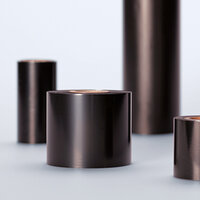
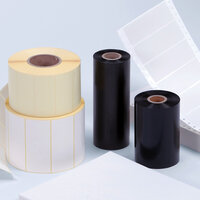
Printable barcode labels: If you would like to print your own barcode labels using thermal printers or thermal transfer printers, we’ll manufacture unprinted roll labels, perforated if required, according to your specifications. Print bar code with thermal transfer ribbons from HERMA for first-rate printing results on your barcode label. You can also order barcode labels on sheets or fanfolded labels for continuous printing.
In the HERMA Labels online shop, you can order blank label formats suitable for barcode labels, choosing from a range of standard formats for various printing systems. From small barcode labels (that contain only the code) to larger label sizes, e.g. for pallet labels with barcodes. The filters guide you quickly to the desired label.
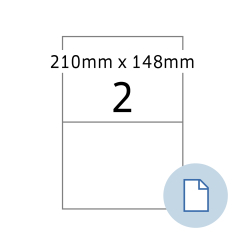
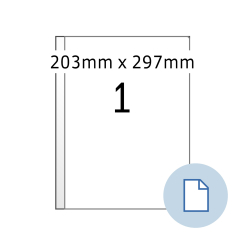
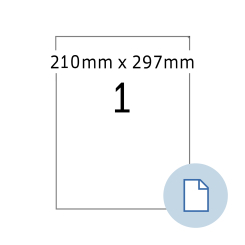
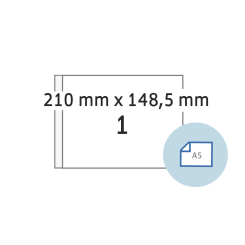
You can easily print A4 sheets of barcode labels yourself using our online label software – ideal for printing EAN codes on A4 labels and creating identical barcodes or sequential barcode labels using the mail merge function. Choose from a range of barcode types – the software calculates the check digit automatically.

Order custom barcode labels
Use the request form to let us know what you need. We’ll be glad to talk with you to find the perfect solution for your application.
Buy barcode labels - from the specialist for marking and labelling - talk to us!

Request a quotation
We produce labels according to your specifications - to suit your application!
Please take a moment to give us some detailed information on the following page so that we can advise you well.